About Bishop Loverde
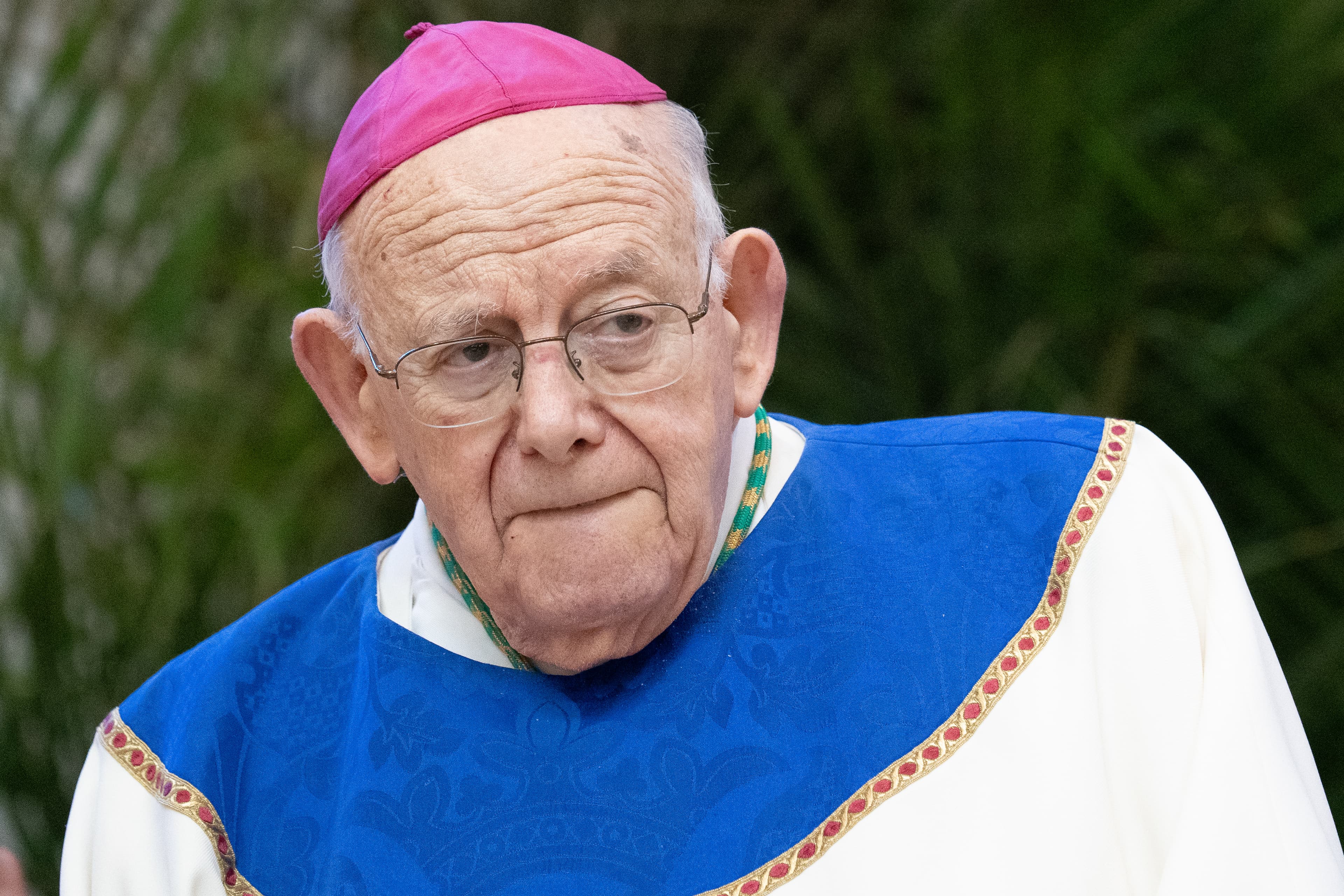
Paul S. Loverde is the beloved Bishop Emeritus of the Diocese of Arlington in Virginia. Appointed by St. John Paul II as the diocese’s third bishop, he served Arlington for nearly seventeen years — from 1999 to 2016. In the words of Bishop Michael F. Burbidge, Arlington’s current prelate, Bishop Loverde “has been a steadfast advocate for the sacredness of all human life, an ardent supporter of Catholic education, and an active promoter of vocations to the priesthood and consecrated life.”
Bishop Loverde also demonstrated, well before it became a common conversation in the Church, a keen awareness of the increasing mental-health needs in dioceses across the United States. Seeking to address that issue, he has served on the board of directors of the Institute for the Psychological Sciences — now Divine Mercy University — for the past twenty-five years.
What the fund does
To honor Bishop Loverde’s inspiring legacy and to further support priestly and religious vocations, DMU has established the Bishop Loverde Scholarship Fund in his name. The fund supports two groups of students:
- Priests and religious from across the country who will serve their home dioceses and religious communities after graduation.
- Students who agree to work in the Diocese of Arlington after graduation.
The scholarship covers a meaningful portion of tuition for these students in DMU’s graduate programs — the Psy.D. in Clinical Psychology, the M.S. in Counseling, the M.S. in Psychology, and the Spiritual Direction Certificate.
Why this scholarship matters
Mental-health crises — addiction, depression, suicide, the aftermath of abuse, marriage and family breakdown — increasingly land at the parish door before they reach a clinician. Priests, deacons, and religious are often the first encounter someone in distress will have. Without formation in psychology and counseling, that encounter is harder than it needs to be on both sides.
A typical recipient is a parish priest in his thirties or forties who has seen the limits of his seminary training in this area and wants to be more competent in handling the actual situations he encounters in confessional, sick-call, and counseling. He enrolls at DMU on a Loverde scholarship, completes his degree part-time while continuing parish ministry, and leaves with the formation — and in many cases the clinical hours and licensure — to be measurably more effective. Multiply that by the decades he will serve and the souls he will touch.